

December 5, 2025
The fast fashion industry generates massive textile waste and contributes to microplastic pollution. A new solution, regenerative additives, can help fabrics biodegrade safely after disposal while maintaining durability during use.
These additives work by attracting microorganisms to synthetic fibers, enabling controlled breakdown in specific conditions like composting facilities or managed landfills. Key benefits include:
Products like BioFuture Additives make it easy for manufacturers to integrate this technology into existing processes, supporting a circular economy where textiles return to the earth instead of lingering as waste.
Regenerative additives are specialized compounds added to textile fibers during production to ensure they break down naturally at the end of a garment's life. These additives maintain the fabric's quality and durability while in use, but once disposed of, they enable the material to decompose into organic nutrients.
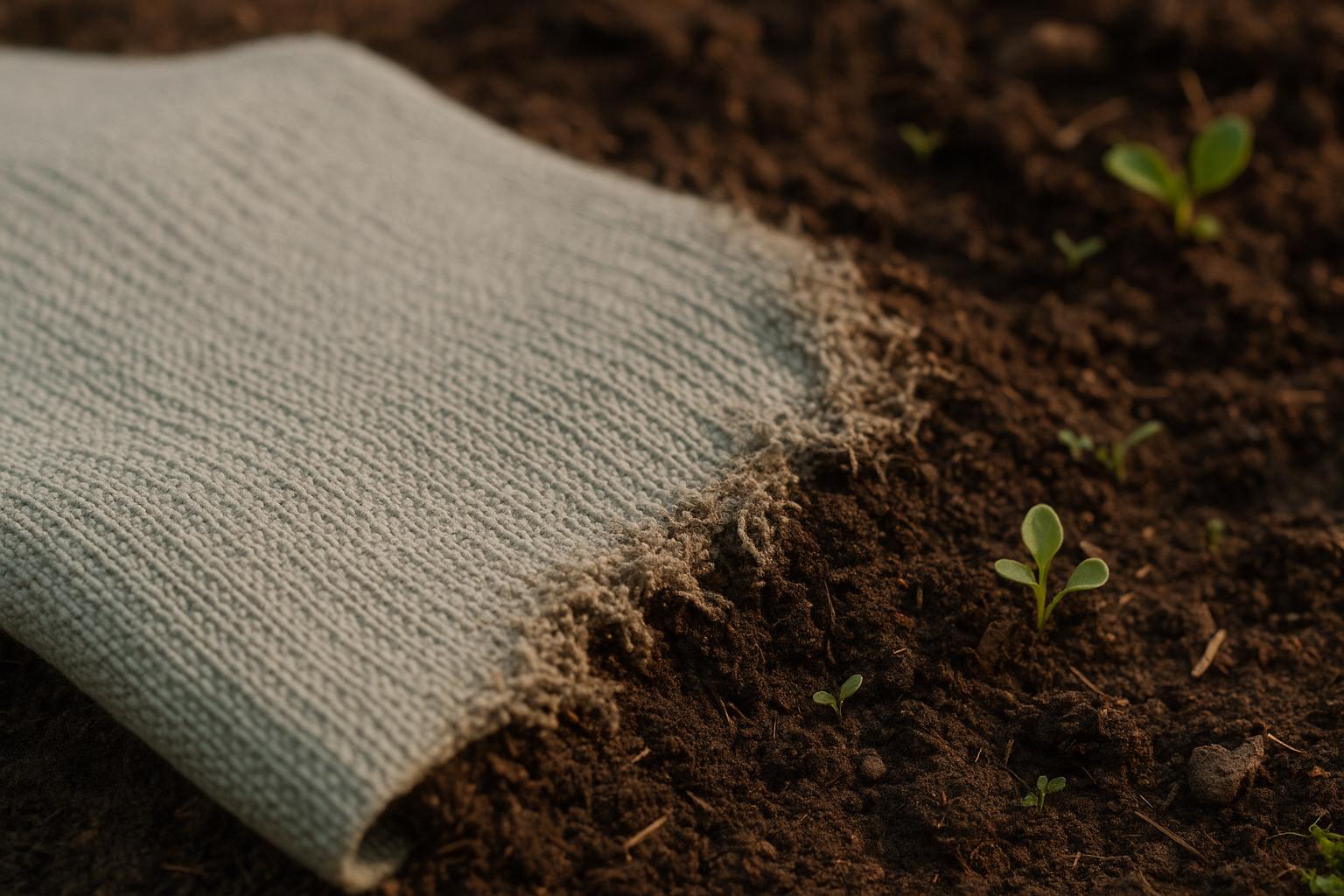
The term "regenerative" highlights the circular approach these additives bring to textiles. Instead of creating waste that lingers for centuries, fabrics treated with regenerative compounds are designed to return to the earth as organic matter. This is a stark contrast to traditional synthetic fabrics, which often degrade into harmful microplastics that pollute ecosystems.
On a molecular level, regenerative additives work by attracting microorganisms naturally found in the environment. These microorganisms break down the polymer chains in synthetic fibers. Crucially, these additives are engineered to ensure the fabric remains durable and functional during its intended use, only activating their decomposition properties under specific conditions.
Let’s dive into the science that makes this process possible.
The key to regenerative additives lies in their ability to modify synthetic polymers, making them more accessible to microorganisms. Materials like polyester, nylon, and acrylic are typically resistant to microbial breakdown due to their tightly bonded structures. Regenerative additives change this dynamic by introducing organic compounds that act as microbial attractants.
When a garment containing these additives ends up in a biologically active setting - such as an industrial composting facility or a managed landfill - microorganisms begin colonizing the fabric's surface. The additives draw these microbes in, prompting them to release enzymes that break the fibers into smaller, digestible components. These components are then metabolized into simpler substances like carbon dioxide, water, and biomass.
The speed of this process depends on factors like moisture, temperature, and microbial activity. Under ideal conditions, the degradation happens much faster than with untreated synthetic textiles, yet the additives remain inert during the garment's regular use and storage.
The byproducts of this process are non-toxic and integrate safely into the soil, offering a solution to the microplastic pollution caused by conventional synthetic materials.
This controlled breakdown process has significant implications for industries like fast fashion.
With mounting pressure to reduce its environmental impact, the fast fashion industry can benefit greatly from regenerative additives. These compounds offer practical ways to tackle key challenges, including reducing waste through natural decomposition, ensuring fabric durability during use, and addressing microplastic pollution by enabling shed fibers to biodegrade rather than persist in the environment.
For fashion brands, regenerative additives represent an opportunity to meet environmental goals without compromising on product quality or drastically increasing production costs. These additives can be incorporated into existing manufacturing processes with minimal adjustments, making them a cost-effective option for companies working within tight budgets.
Additionally, regenerative additives support various end-of-life scenarios, such as mechanical recycling or controlled biodegradation, aligning with circular economy principles. By adopting these solutions, brands can better navigate evolving environmental regulations while reinforcing a system where textiles safely and naturally return to the earth.
Fast fashion thrives on quick trends, which often means garments are made from low-quality synthetic fibers. These materials tend to pill, fade, or lose their shape after just a few wears, leading to a constant cycle of disposal and replacement. This creates a mountain of waste. Regenerative additives tackle this issue by extending the life of fabrics and ensuring they break down safely when discarded. This not only reduces the waste from fast fashion’s rapid turnover but also addresses larger environmental concerns tied to the industry.
Synthetic textiles are a growing problem in landfills. They don’t decompose under normal conditions, taking up space indefinitely. Worse, these materials shed microplastic fibers throughout their lifecycle - whether it’s during washing, daily use, or even as they slowly degrade. These tiny fibers often escape wastewater treatment systems and make their way into rivers, oceans, and eventually, the food chain, impacting marine ecosystems and human health.
Regenerative additives offer a game-changing solution. In environments rich with biological activity, these additives transform synthetic fibers into basic organic compounds rather than leaving behind harmful microplastics. This approach not only reduces landfill waste but also addresses the pollution caused by microplastics, offering a cleaner way forward.
For years, the U.S. has exported low-value textiles, many of which end up in poorly managed dumps overseas, creating environmental and social challenges. Regenerative additives change the game by enabling these materials to biodegrade in controlled conditions right here at home. This aligns with circular economy goals and helps reduce the environmental and ethical issues tied to waste exports.
The first step is to ensure the base polymer is compatible with the regenerative additive. This is essential to maintain the fabric's performance, including its durability and recyclability. Compatibility testing involves blending the additive into the polymer and evaluating its impact on the textile's physical, mechanical, and chemical properties. These assessments are crucial before implementing any production changes.
Regenerative additives, like BioFuture Additives, are specifically designed for use with widely utilized polymers in the fashion industry, such as PET (polyester), nylon, and other synthetic materials.
The additive must integrate smoothly without affecting the fabric's strength or recyclability. To confirm this, manufacturers should conduct tests using ASTM standards to ensure that critical properties - like tensile strength, elasticity, and abrasion resistance - are preserved. These steps are key to supporting the sustainable cycles promoted by regenerative textile technologies.
Once compatibility is confirmed, the additive can be incorporated into the production process.
After verifying compatibility, the next phase is incorporating the additive into the manufacturing workflow. Regenerative additives are designed to work seamlessly with existing production setups, meaning no adjustments to machinery, molds, or methods are typically required.
During polymer processing, the additive should be mixed to ensure even distribution throughout the material. This uniform integration ensures that the textile retains its performance characteristics while also gaining improved biodegradability.
Afterward, it's essential to test the finished product thoroughly to confirm it meets all quality and compliance standards.
Once production is complete, rigorous quality control processes are necessary to verify that the additive-enhanced textiles meet both durability and biodegradability goals. These checks ensure the product maintains its performance while adhering to safety and industry standards. Manufacturers must also confirm that the additive doesn't introduce any harmful substances and that the final textile complies with all relevant benchmarks.

Founded by Dean Lynch and Leviticus Bentley, BioFuture Additives offer a groundbreaking way to tackle the environmental impact of synthetic textiles. These additives allow synthetic fabrics to break down into non-toxic biomass in microbe-rich environments, like landfills, oceans, or composting facilities, while maintaining their durability during use. Essentially, the additives stay inactive throughout the garment's life but kick into action when the material reaches its end-of-life in the right conditions.
What’s more, these additives are designed to work seamlessly with existing recycling systems. Treated textiles can go through standard recycling processes without causing any disruptions. This means they can be reused during their initial lifecycle and biodegrade effectively when they're no longer usable. Manufacturers can also integrate BioFuture Additives into their current production setups without needing new equipment or retraining their teams. Plus, every product undergoes stringent testing to ensure it meets safety and compliance standards.
This easy adoption opens up possibilities for using the additives across a wide range of textile applications.
BioFuture Additives are particularly well-suited for synthetic textiles, which are a staple of fast fashion. Fabrics treated with these additives maintain their quality and performance during use, while ensuring they convert into non-toxic biomass after disposal. This makes the additives a practical option for various textile products, enabling them to have a functional lifecycle while addressing environmental concerns at the end of their use.
By combining streamlined production with long-lasting durability, BioFuture Additives align perfectly with circular economy principles. During the first life of a textile, the additives integrate effortlessly with conventional recycling systems, ensuring the material can be reused. When the textile reaches the end of its lifecycle, the additives activate in microbe-rich environments, breaking the material down into non-toxic biomass. This predictable biodegradation process not only reduces waste but also supports carbon neutrality by returning carbon to natural cycles, instead of leaving it as persistent waste.
In addressing the waste challenges of fast fashion, BioFuture Additives provide a practical and environmentally conscious solution that bridges the gap between sustainability and modern textile production.
To truly extend the lifespan of textiles, regenerative additives need to be paired with smart design choices. Together, these elements can help create garments that last longer, reduce waste, and minimize environmental impact.
Durability begins with thoughtful design. Modular construction, for example, allows individual parts of a garment to be replaced rather than throwing out the entire piece. Features like accessible seams, visible stitching, and simple construction make it easier for consumers to handle basic repairs at home or through local tailors. This approach contrasts sharply with the intricate designs of fast fashion, which often make mending impractical.
For areas prone to wear and tear - think elbows, knees, or pockets - reinforcing them with extra fabric, stronger thread, or specialized stitching can make a big difference. These small design tweaks, when combined with regenerative additives like BioFuture Additives, not only improve a garment's durability during use but also ensure it breaks down in a controlled way when its time is up.
Creating textiles that are both tough and biodegradable is a delicate balancing act. Synthetic fibers such as polyester and nylon are great for strength and can handle frequent washing and wear. When treated with regenerative additives, these materials can maintain their durability while breaking down under the right conditions.
Fiber blends are another important factor. Mixing synthetic fibers with natural ones can deliver the best of both worlds: strong performance during use and easier biodegradation at the end of the garment's life. The key is ensuring that the additives work well with all components of the blend.
Fabric weight and weave density also play a role. Heavier fabrics with tighter weaves last longer, resisting wear better than lighter, loosely woven options. However, the weight and density should match the garment's intended purpose to avoid wasting materials unnecessarily.
No design is complete without rigorous testing to ensure both durability and biodegradability. Abrasion resistance tests, like the Martindale test, help determine how well fabrics stand up to repeated friction. For garments in fast fashion, proving they can handle significant wear and tear is especially important.
Tensile strength testing measures how much force a fabric can endure before tearing - critical for clothing that undergoes frequent movement. These tests should be conducted in both dry and wet conditions since moisture can weaken fabric strength.
Biodegradability testing is equally essential. Simulating real-world disposal conditions - such as landfill temperatures, moisture levels, and microbial activity - helps confirm that the fabric breaks down safely without releasing harmful microplastics or toxins.
Wash durability is another key factor. Textiles treated with regenerative additives must hold up through multiple washes under typical U.S. care routines. Testing should involve standard washing machines, common detergents, and a range of water temperatures to ensure the fabric performs consistently. Importantly, the additives need to stay inactive during washing and only activate in environments rich in microbes, like landfills.
Lastly, colorfastness tests ensure that dyes and finishes remain stable through repeated laundering. This helps preserve the garment's appearance and quality, ensuring it looks good and lasts throughout its useful life.
As textile waste and microplastic pollution continue to grow, finding effective solutions has become more pressing than ever. Regenerative additives offer a practical way forward by not only extending the lifespan of textiles but also ensuring they break down safely at the end of their use. This approach blends smart design with cutting-edge chemistry to address critical environmental challenges.
By focusing on reinforcing high-wear areas, creating garments that can be repaired, and fine-tuning fiber blends, manufacturers can craft clothing that stands up to daily wear while remaining biodegradable. Products like BioFuture Additives fit seamlessly into current manufacturing processes, maintaining garment strength while aligning with goals like carbon neutrality and a circular economy.
The strategies discussed in this article - such as selecting the right base polymers and conducting thorough performance tests - provide a clear guide for incorporating regenerative additives into textile production. Whether you're launching a new clothing line or reevaluating existing methods, these solutions help reduce environmental impact while meeting consumer demands for durable and eco-friendly products.
Shifting to sustainable textiles takes dedication, but those who embrace regenerative additives now will be leading the way in an industry moving toward greater environmental responsibility. The tools and strategies are ready - it's time to take the next step toward a more sustainable, circular future for textiles.
Regenerative additives play a dual role in the lifecycle of textiles. While the fabrics are in use, these additives enhance their durability, helping them retain their quality and functionality over time. But their benefits don’t stop there. When the textiles are eventually discarded, these additives enable the materials to break down naturally under specific environmental conditions, minimizing waste and contributing to a more eco-conscious approach.
What makes these additives particularly noteworthy is their ability to strike a balance between long-lasting wear and biodegradability. This balance is crucial in the fast fashion industry, where the push for a circular economy is gaining momentum. By extending the lifespan of garments and ensuring they decompose in an environmentally responsible way, regenerative additives are paving the way for more sustainable fashion practices.
Regenerative additives are making waves in the fast fashion industry by addressing two pressing issues: textile durability and waste reduction. These additives help fabrics last longer while also promoting biodegradability, which means fewer clothes piling up in landfills.
When brands incorporate regenerative additives into textile production, they’re taking a big step toward reducing their environmental impact. This method doesn’t just cut down on pollution - it also supports a circular economy, encouraging smarter consumption and more responsible production practices.
Incorporating regenerative additives into textile production doesn't require an overhaul of existing processes. These additives are crafted to work effortlessly with current manufacturing setups, enabling producers to improve product durability and sustainability without disrupting their workflows.
Manufacturers can begin by collaborating with additive suppliers to identify the right formulations for their specific materials. Many of these additives are designed to be compatible with standard equipment and production techniques, which makes the transition relatively simple and budget-friendly. Starting small - such as testing additives on a pilot scale - allows manufacturers to ease into the process without causing major interruptions.