

February 12, 2026
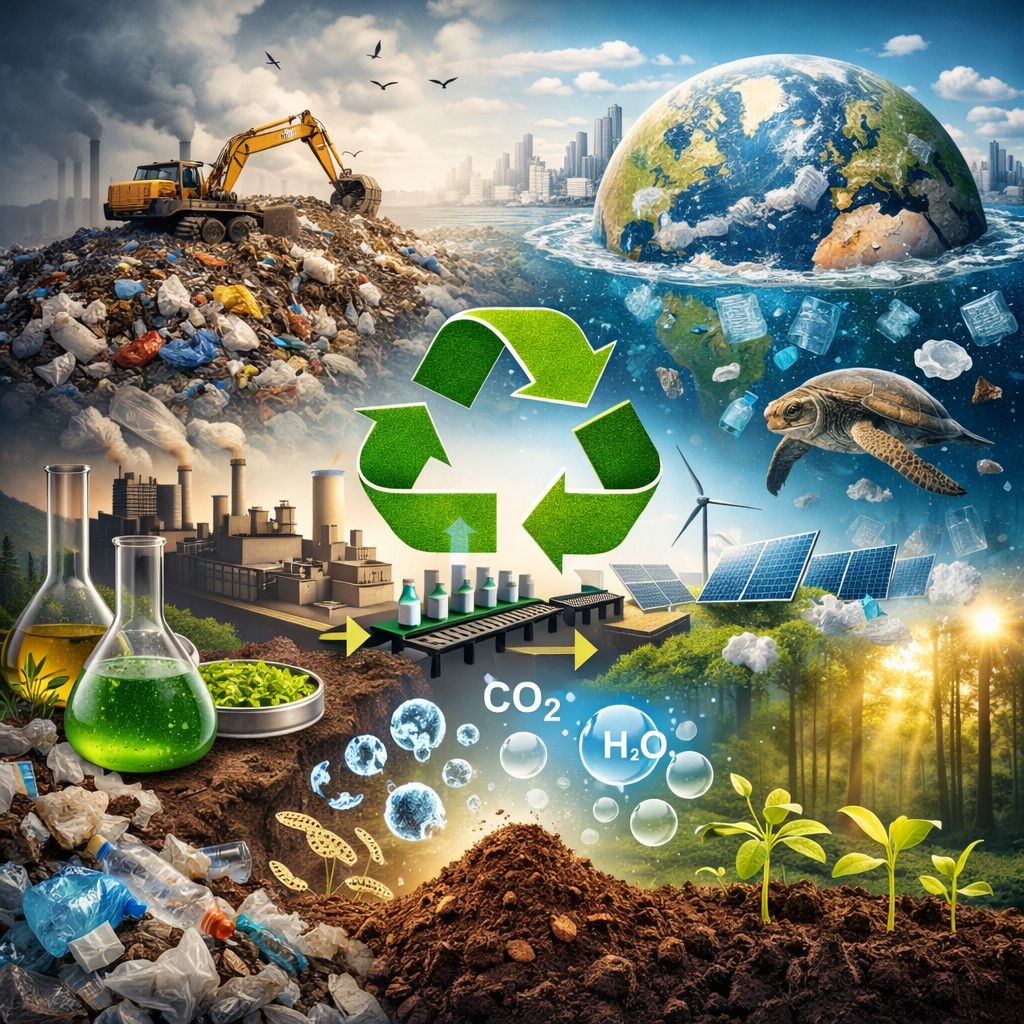
A circular economy is an economic system that seeks to design out waste and pollution, keep products and materials in use, and regenerate natural systems — fundamentally different from the traditional "take → make → dispose" model. It's about transforming how we produce, use, and recover materials so they circulate instead of accumulating at end-of-life.
Despite decades of sustainability efforts, the world is producing twice as much plastic waste as 20 years ago, yet only a tiny share is truly recycled. According to the OECD:
Other global data show that total plastic production has soared from a few million tonnes in the mid-20th century to well over 450 million tonnes annually, and much of this waste is poorly managed.
Plastic production continues to rise, and without systemic change, experts warn that plastic waste volumes are on track to nearly triple by 2060, with roughly half of it ending up in landfill and less than a fifth recycled.
Globally, vulnerable waste systems mean a significant share of plastic is mismanaged — not recycled or safely contained. The OECD notes that recycling is falling short while landfill and leakage remain the dominant outcomes.
Plastic leakage into the oceans is a major environmental problem. According to Our World in Data, between ~1 and 2 million tonnes of plastic enter the ocean annually, with more than 80% originating from land-based sources — a consequence of mismanaged waste systems and gaps in collection infrastructure.
This leakage persists even though plastics provide enormous value across sectors — from packaging and construction to healthcare — because waste management systems struggle to keep pace with production and consumption.
Here's how some major markets compare in terms of plastic waste and mismanagement risk:
U.S. data show very low domestic recycling rates for plastics — estimates cluster near 5–6% when accounting for actual end destinations, with the majority ending up in landfill or being exported for disposal.
India is among the top countries globally responsible for a large share of mismanaged plastic waste, contributing to overall global leakage patterns. In one analysis it was among 12 countries accounting for ~52% of the world's mismanaged plastic waste.
Mexico also ranks high on global mismanaged waste indicators, with data showing ~34% mismanaged plastic waste — meaning a significant portion is not recycled, incinerated safely, or securely landfilled.
Brazil generates significant plastic waste — about 11+ million tonnes per year — and has a very low recycling rate, with only about 1–2% of its plastic waste recycled, meaning most ends up in landfill or otherwise unmanaged.
These figures illustrate that even large economies with formal sectors still face structural challenges in achieving circularity for plastics.
With only ~9% of plastic waste recycled globally, recycling is important but insufficient as the sole pathway to circularity. Robust systems — from design to reuse, collection, and recovery — are needed to close the loop.
Markets with high mismanaged waste have greater plastic leakage to land and sea, creating regulatory, reputational, and supply chain risks for global brands and converters who must meet increasingly stringent reporting and compliance standards.
Leakage persists even as international negotiations progress toward global instruments on plastic pollution. Breaking the Plastic Wave research highlights that without ambitious, systemic change, plastic pollution could more than double, driven by rising production and inadequate waste management infrastructure.
"The current plastics lifecycle is far from circular."
— OECD Global Plastics Outlook (noting that only a small slice of plastic is recycled while most goes to landfill, is incinerated, or is mismanaged).
"We have the ability to transform this... but decision-makers will need to prioritise people and the planet."
— Pew Charitable Trusts Breaking the Plastic Wave project, outlining pathways to potentially cut plastic pollution dramatically by 2040 with systemic change.
Achieving circular economy goals means:
This is not only an environmental necessity but a commercial imperative: regulators, customers, investors, and supply chains are increasingly scrutinising companies' claims and outcomes — not just intentions.