

March 31, 2026
There's a moment in The Plastic Detox on Netflix that stays with you.
It's not the images of pollution — we've all seen those before.
It's the realisation of how deeply plastics — particularly microplastics — have moved beyond visibility and into the systems we depend on, and even into ourselves.
What the documentary does well is shift the conversation.
Not just how much plastic we use — but what happens to it after we're done with it.
And importantly, it highlights something often underestimated:
👉 The role of synthetic textiles and everyday polymers in this equation.
We are not just managing waste — we are managing materials that were never designed to disappear.
For years, the industry has focused on reduction and recycling — both important.
But as The Plastic Detox on Netflix subtly points out, these approaches are slowing the problem, not solving it.
Much of what we call "sustainable" today still operates within a linear system, just extended over time.
The real shift now is this:
👉 From use-phase thinking
👉 To end-of-life behaviour
Because ultimately:
Materials are not defined by how they perform in use — but by what they become after use.
At BioFuture, we've been focused on this exact gap.
Through Polymer Bioconversion, we enable plastics and textiles to enter controlled biological pathways, supporting their transition into biomass under defined conditions.
This supports more regenerative outcomes, where materials move beyond persistence and can contribute back into biological systems as non-toxic biomass, rather than accumulating indefinitely.
Importantly, this extends bioconversion — traditionally applied to organic waste — into synthetic polymers, bringing plastics and textiles into the biological cycle.
Our approach is grounded in real, testable environments, aligned with internationally recognised standards:
• ASTM D5511 / ISO 15985 — landfill (anaerobic)
• ASTM D5338 / ISO 14855 — industrial composting
• ASTM D5988 — soil environments
• ASTM D6691 — marine environments
Under these defined conditions, microbial activity facilitates the breakdown of polymer chains, supporting their gradual conversion into non-toxic biomass over time.
This is not theoretical.
BioFuture additive technology:
✔ Integrates into existing manufacturing
✔ Works with both virgin and recycled polymers
✔ Maintains product performance
✔ Remains recycling-friendly where applicable
✔ Enables improved end-of-life outcomes without disrupting production
In simple terms:
👉 No change to how products are made
👉 No compromise during use
👉 A defined pathway after use
This is not about replacing recycling.
It is about completing the lifecycle — and enabling more regenerative material systems.
The future will be built on integrated systems:
• Better materials
• Smarter design
• Responsible production
• Recycling where possible
• Defined end-of-life pathways such as bioconversion
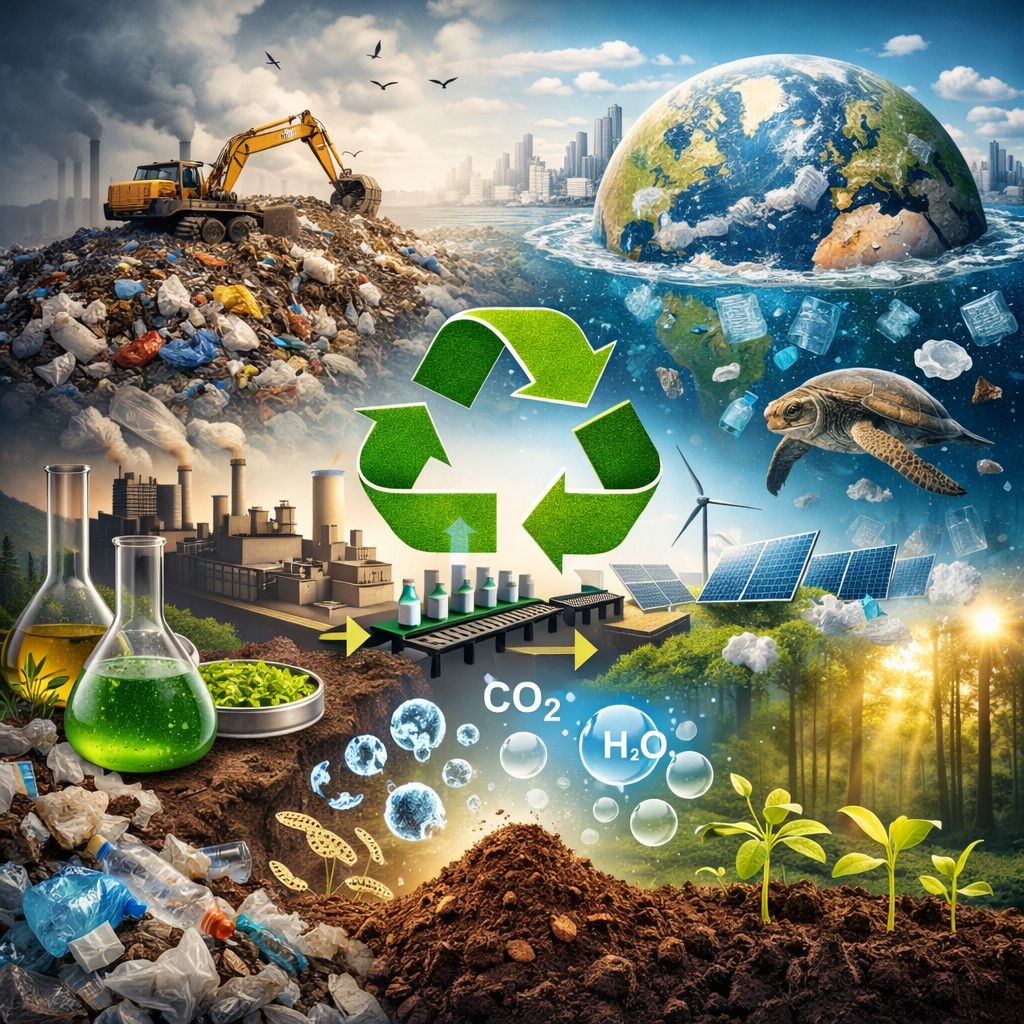
For context, the broader system reflects the scale of the challenge highlighted in The Plastic Detox:
What The Plastic Detox on Netflix ultimately reinforces is simple:
The definition of "sustainable" is changing.
And with it, expectations.
Not just around reducing impact —
but around what materials become next.
If this is part of your current thinking, I'd welcome the conversation.
Warm regards,
The BioFuture Team
Advancing polymer sustainability through scalable bioconversion technology.